


Doctor and Saint, Our Alphonsus, Founder and Father...
St. Alphonsus de Liguori
Prince of Moralists,
Most Zealous Doctor,
Patron of Confessors and Moral Theologians
(1696-1787)
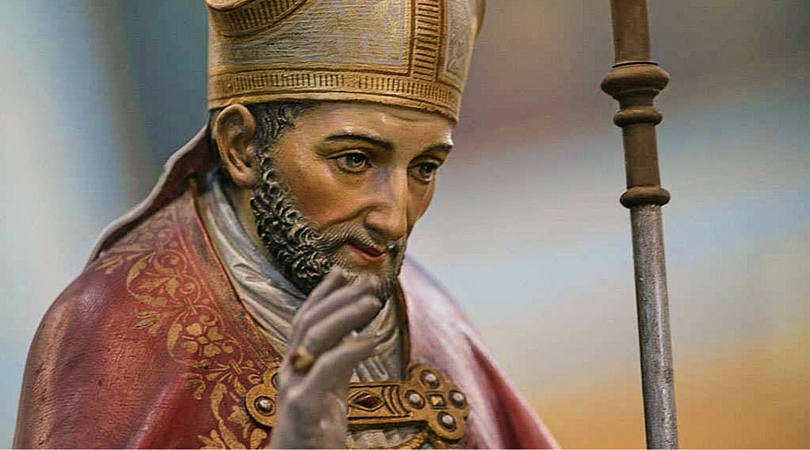
A Brilliant Lawyer
Don Joseph decided that his oldest son, Alphonsus, would be a lawyer and whatever beyond that he could attain in government. (p603)
* The boy won degrees in canon civil law at the age of only 16. (p603)
* After visiting the courts for two years, he began active practice at 18, still two years under the age for attaining a degree. (p603-604)
* His complete honesty and hard logic made him very successful. (p604)
* He wrote a book called: Visits to the Blessed Sacrament and the Blessed Virgin Mary. (p604)
* Part of St. Alphonsus’ activity consisted in street preaching. (p605)
The View of the Incarnation
* St. Alphonsus’ Way of the Cross and Visits to the Blessed Sacrament give familiar testimony to his devotion to the sacred humanity of Christ. (p616)
His Own Marian Devotion
* ‘Be devout to the Blessed Virgin and she will save you,’ he used to say. (p619-620)
* He made a vow to preach about Mary every Saturday and did this even at the age of 80 after retiring from his bishopric. (p620)
* He also fasted on Saturdays in her honour. (p620)
* He required the Redemptorists to preach a sermon on Mary’s mercy at every mission. (p620)
A Practical Writer
* ‘What St. Thomas Aquinas is to Christian philosophy, and what Bellarmine is to controversy, St. Alphonsus is in the practical department of ethical science and the guidance of souls. (p621) (IER, 56)
* ‘God knows how much effort and fatigue I have experienced in that work,’ he said of his Moral Theology, on which he laboured for 30 years through 8 editions. (p621)
* His final revision of Moral Theology (the 8th) culminated in a 4,000 page work (p23)
* St. Alphonsus has been given much credit for defeating Jansenism in southern Italy. (p623)
* He considered passions, impulses, temptations, actual graces, psychological construction, anything that might influence action and judgement. (p623)
* ‘For this service the Church honours him as Doctor and Prince of Moral Theologians. (p623)
The Best-Selling Author of all Time
* In the 1980s, O.B.L. Victory Missions of Brookings, South Dakota reprinted St. Alphonsus’ main ascetical works, except Visits to the Blessed Sacrament, in an in inexpensive pocketbook format, using the old Redemptorist edition by Rev. Eugene Grimm, thus achieving widespread distribution in a few years’ time. (p624)
* The titles included:
1. Preparation for Death; The Way of Salvation and Perfection,
2. The Great Means of Salvation and Perfection,
3. The Incarnation, Birth and Infancy of Jesus Christ; The Passion and Death of Jesus Christ;
4. The Dignities and Duties of the Priest. (p624)
* Most of these volumes included several shorter works by the Saint. (p624)
Declared a Doctor of the Church
* The first book published by St. Alphonsus was the Visits to the Most Blessed Sacrament and the Blessed Virgin Mary. (p624)
* This was in about 1745, when he was already 49 years old. (p624)
* His last work came out in 1777, and concerned the fidelity of vassals. (p624)
* For about 30 years he poured out his literary work, to the total of 111 distinct titles. (p624)
* Some of these were of pamphlet size. (p624)
* But many were also sizeable books. (p24)
* His Moral Theology was 4,000 pages, and the above mentioned volumes run 400 to 900 pages each (usually including more than one work in a volume). (p624)
* For a man who started writing rather late in life, St. Alphonsus’ output was tremendous. (p624)
The Patron of Confessors
* St. Alphonsus summarized these principles in practical points for confessors and preachers. (p626)
1. Their primary purpose is to eradicate sin.
2. They must get the penitent to remove occasion of sin; and
3. They should insure perseverance in living in grace by laying the foundation of a genuine Christian life. (p626) (Circular Letters, p17)
* People flocked to St. Alphonsus for Confession. (p626)
* He was unfailingly kind, following the principal that:
‘the deeper a soul has fallen into sin, the more it is bound down by the powers of Hell, the greater should be the kindness of the confessor in order to win it to repentance, to snatch it from the devil, and to bring it to the arms of Jesus Christ. (p626) (St. Alphonsus Mary de Liguori, by D.F. Miller, CSSR and L.X. Aubin, CSSR., Quebec; London, 1940; TAN, 1987, p39)
* St. Alphonsus says ‘if all preachers and confessors would discharge their duties as they should, the whole world would be holy! Bad preachers and bad confessors are the ruin of the world; and every preacher and every confessor is bad who is not devoted to his office, who does not study to improve himself in it, who does not fulfil it to the very best of his
ability. (p626) (Circular Letters, p12)
A Composer of Letters
* St. Alphonsus became a music composer of some merit. (p627)
* As a bishop, St. Alphonsus restored Gregorian chant to the diocese and issued a pastoral letter on Church music. (p628)
* Altogether St. Alphonsus wrote about 50 hymns. (p629)
A Complex Man
* We can call St. Alphonsus a complex man because he was highly intellectual, yet very argent in nature; he was a master moralist, yet himself troubled by personal scruples; he wasted no time at all, yet cultivated the arts; he prophesied and worked miracles, but often felt completely inadequate and unworthy; he carefully, yet his judgement was quite independent; he came from the nobility, but cherished the poor and lived as one of them. (p630)
* He was a very direct man, whose words and actions were simple and heartfelt and went directly to the minds and hearts of others. (p630)
* Perseverance is a grace distinct from the love of God. (p631)
A Very Busy Man
* St. Alphonsus allowed himself no time to miss receiving the grace of perseverance. (p631)
* He was one of the busiest and most productive of men. (p631)
* St. Alphonsus made and kept a vow not to lose a single moment of time. (p631)
* He divided the day into periods, and in this way he found time for everything. (p631)
* Even his most crowded schedule included three-and-a-half-hour periods for meditation, besides the time set aside for daily Mass, thanksgiving, Divine Office, Rosary and a visit to the Blessed Sacrament. (p631)
A Poor Man
* As a bishop, he made it a rule to accept no personal gifts. (p632)
* As an author, he wanted no profit from his books. (p632)
* For many years he ate only once a day. (p632)
An Ardent Nature
* St. Alphonsus had an early upbringing that was somewhat rigorous, an acute legal mind, tenacity for details, a strong tendency to scruples and a strong sense of justice, including its punitive form. (p634)
* Yet the predominating side of his character and his mind was characterised by an unfailing love and sweetness. (p634)
* This quality is what keeps cropping up in his ascetical works, and even more in his letters. (p634)
Success and Failure
* A few of his books are works on asceticism and devotion. (p636)
* They contain many formal prayers, and they breathe the spirit of piety. (p636)
* If anyone says he cannot pray, let him read St. Alphonsus Liguori. (p636)
- St. Alphonsus’s feast day is August 1st (August 2nd in the 1962 Calendar. (p636)
'The 35 Doctors of the Catholic Church' (2000) by Fr. Christopher Rengers


